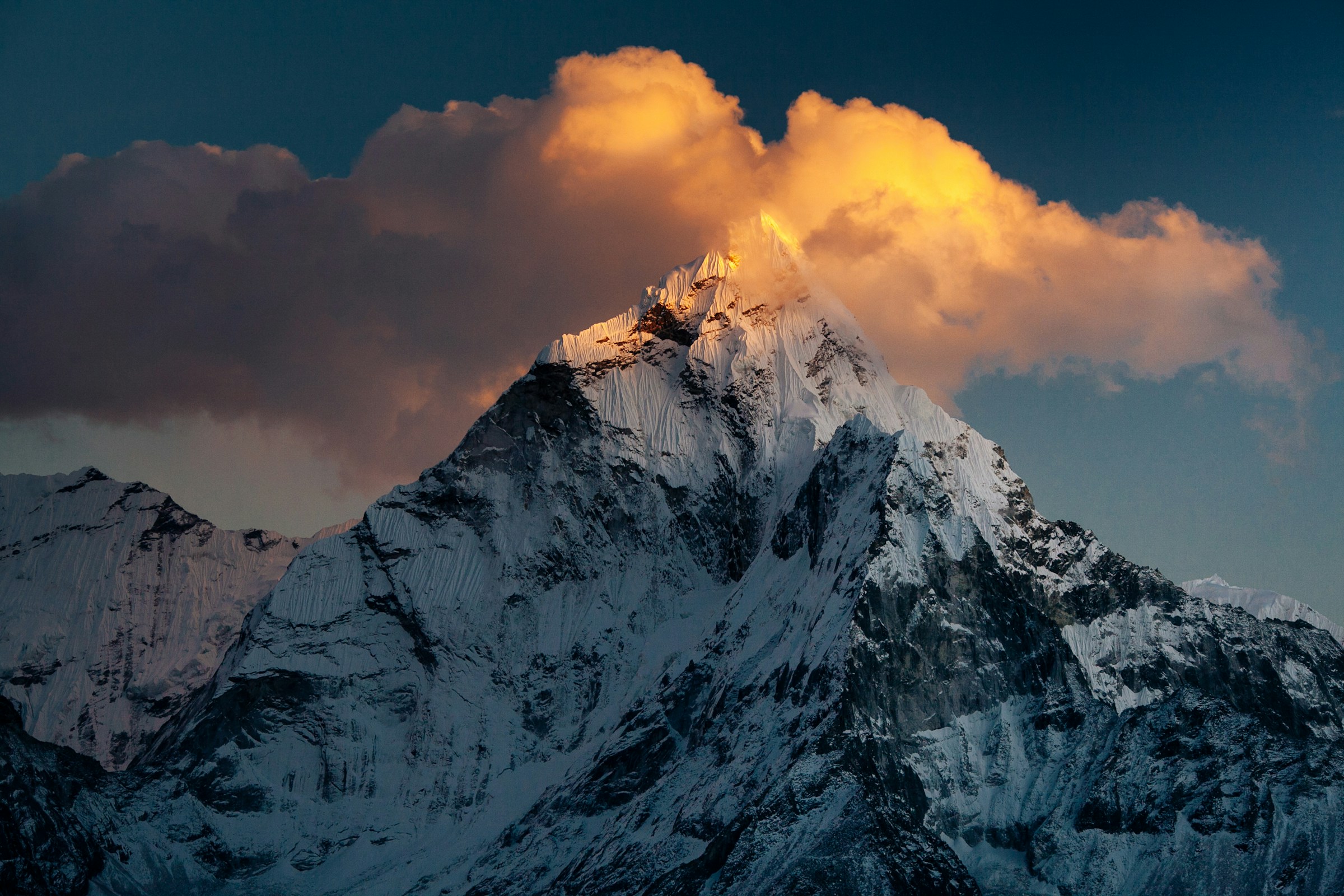
Snow-capped Himalayan peaks catching early morning light above a high ridgeline

SMALL GROUPS. IFMGA GUIDES. THE NEPAL AND LADAKH HIMALAYA.

The summit is optional.
Getting the altitude right is not.

Trekking and climbing expeditions to Everest Base Camp, Gokyo Lakes, the Annapurna Circuit and beyond, built around an ascent rate your body can actually keep up with.

ACCLIMATISATION FIRST, ITINERARY SECONDHow we pace a climb KHUMBU VALLEY · SOLUKHUMBU, NEPAL

TREKS AND CLIMBS THAT RESPECT THE ALTITUDE

Not a summit push. A trip your body agrees to.

We plan trekking and climbing expeditions through the Nepal and Ladakh Himalaya: a first trip to Everest Base Camp, the quieter approach to Gokyo Lakes, a full lap of the Annapurna Circuit, a technical climb up Island Peak or Lobuche East, or the high, dry trails of Ladakh's Markha Valley. Kanchenjunga base camp runs as a longer expedition for groups who want the country's remotest massif.

Every itinerary is built backwards from a safe rate of ascent, not forwards from a fixed number of days. Tell us your dates, your fitness and what you want to attempt, and we will tell you plainly whether the two agree — then build the trip that gets you there in one piece.

Tell us where you want to stand
CLASSIC BASE CAMP TREKS6,000M PEAK CLIMBSFAMILY-PACED TREKSPHOTOGRAPHY EXPEDITIONS

TRAILS THAT CLIMB, AND KNOW WHY

Where would you like to walk?

Start with a destination, or with the kind of trip you have in mind.

Twelve to fourteen days on foot from Lukla through Namche Bazaar and Dingboche to 5,364 metres, with the acclimatisation days built in rather than left to chance.
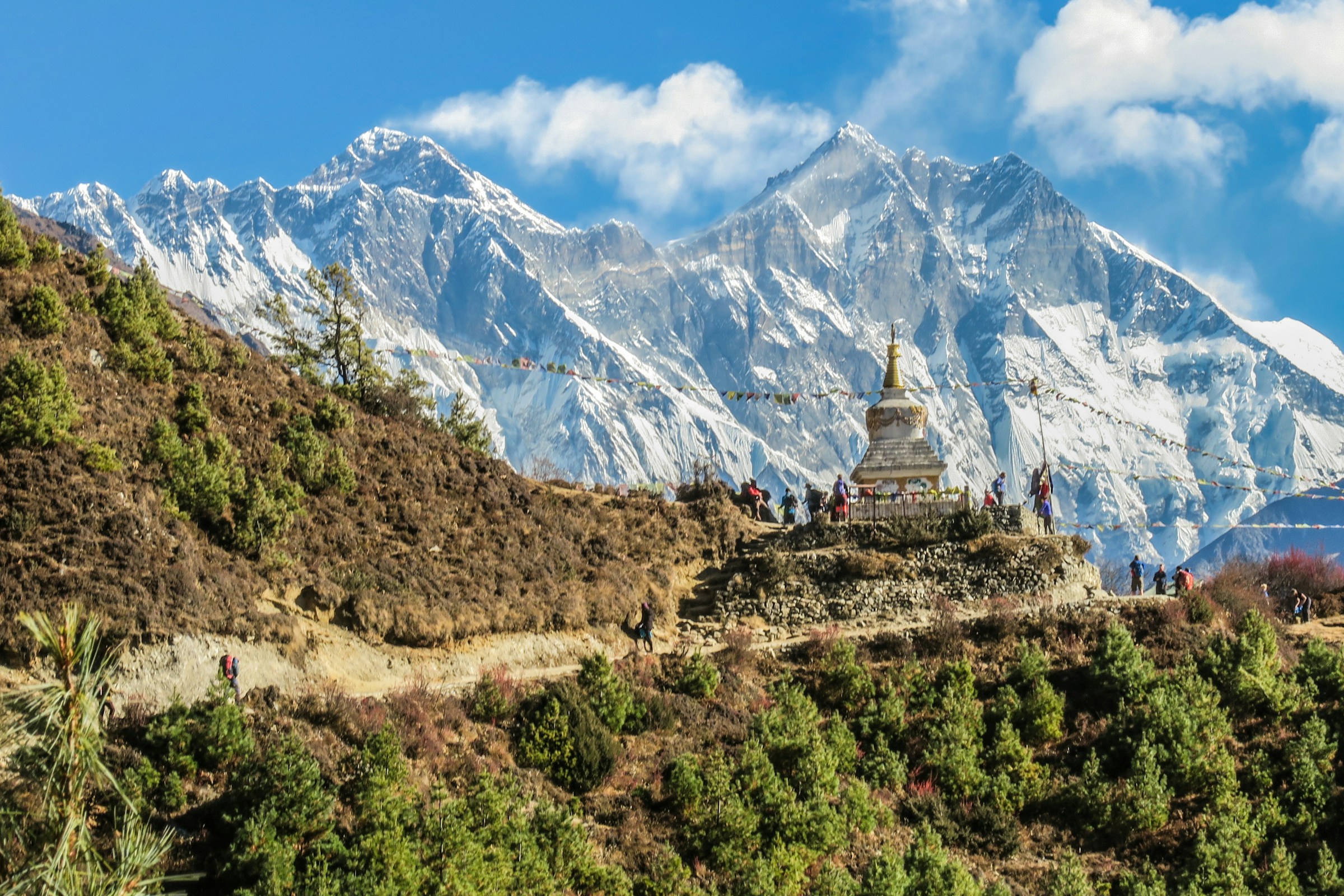

A quieter route up the western side of the Khumbu to a string of turquoise glacial lakes and the wide summit view from Gokyo Ri, often combined with Base Camp over the Cho La pass.

A full circuit of the Annapurna massif over the Thorong La at 5,416 metres, crossing from subtropical valley to high desert in under two weeks.

A high, dry trek through Hemis National Park in the trans-Himalaya, past whitewashed gompas and two passes above 4,900 metres, in a landscape closer to Tibet than to Nepal.

A line of trekkers on a high mountain trail dwarfed by a snow peak behind them

THE PART EVERYONE UNDERESTIMATES

Altitude is not a hazard.
It is the whole design problem.

Most people who turn back above 4,000 metres are not unfit — they simply climbed faster than their blood could keep up with, and nobody planned a rest day to catch it up.
So every itinerary here is built backwards from the ascent rate first, with rest days placed where the physiology needs them rather than where the calendar has room, and the summit or pass comes after that is settled.

See how we pace a climb

FOUR WAYS UP

Choose the pace
and the mountain follows.

A first trek to Base Camp, a technical climb above 6,000 metres, a slower route built for a family, or a fortnight planned around the light — tell us which, and the itinerary and the acclimatisation schedule are built around it.

A trekker walking a suspension bridge strung with prayer flags over a Himalayan gorge

Classic Base Camp treks

The standard route, walked at a rate that works.

The classic teahouse trek to Everest Base Camp or Gokyo, on trails and at lodges we know well, with rest days set by elevation gain rather than by how the two weeks happen to divide. No technical climbing skill required — good fitness and patience with slow mornings are.

WHY TRAVEL THIS WAY

Guides who have read the mountain, not just walked it.

Every departure travels with IFMGA-trained or NNMGA-certified guides and a full Sherpa support team, in a group kept small enough that a change in the weather or in somebody's oxygen saturation gets noticed the same hour it happens.

01

The ascent rate comes first

We hold to roughly 300–500 metres of net sleeping-altitude gain per day above 3,000 metres, with a rest day built in wherever the itinerary would otherwise break that rule. The route bends around the rule, not the other way round.

02

A full Sherpa support team

Guides, a sirdar, cooks and porters who know these valleys in every season, on a wage and insurance standard we hold ourselves to regardless of what a permit office requires.

03

Plain answers about the risk

Symptoms of acute mountain sickness, what turns a headache into a reason to descend, what your travel insurance actually needs to cover — we tell you before you fly, not on the trail.

Start a conversation with Pemba

FIELD NOTES

What the mountain doesn't put in the brochure.

Three short pieces on acclimatisation, the sherpa team, and what actually keeps you warm.

A stone-built teahouse village on a high slope with mountains rising behind it

PHYSIOLOGY

What a rest day is actually for.

Why an acclimatisation day still involves walking, and what your body is doing while you sleep at altitude.

Read the note

An acclimatisation day is not a day off. At Namche Bazaar and Dingboche, the standard pattern is to climb several hundred metres higher during the day — to Everest View Hotel, or up towards Nangkartshang — and then sleep back down at the lower village. 'Climb high, sleep low' gives the body a preview of thinner air without asking it to sleep there yet, and it measurably reduces the incidence of acute mountain sickness on the days that follow.

Above roughly 3,000 metres, the accepted guideline is no more than 300 to 500 metres of net gain in sleeping altitude per night, with a full rest day scheduled for every 1,000 metres gained. That is not a suggestion we make lightly — it is the single biggest lever on whether a group summits together or spends a day escorting somebody back down to a lower village.

We build these days into the itinerary from the start, price them in, and do not shorten a trip to save two nights of teahouse cost. If a group is acclimatising unusually well or unusually badly, the guide adjusts the plan on the ground — that flexibility only exists because the schedule had slack in it to begin with.
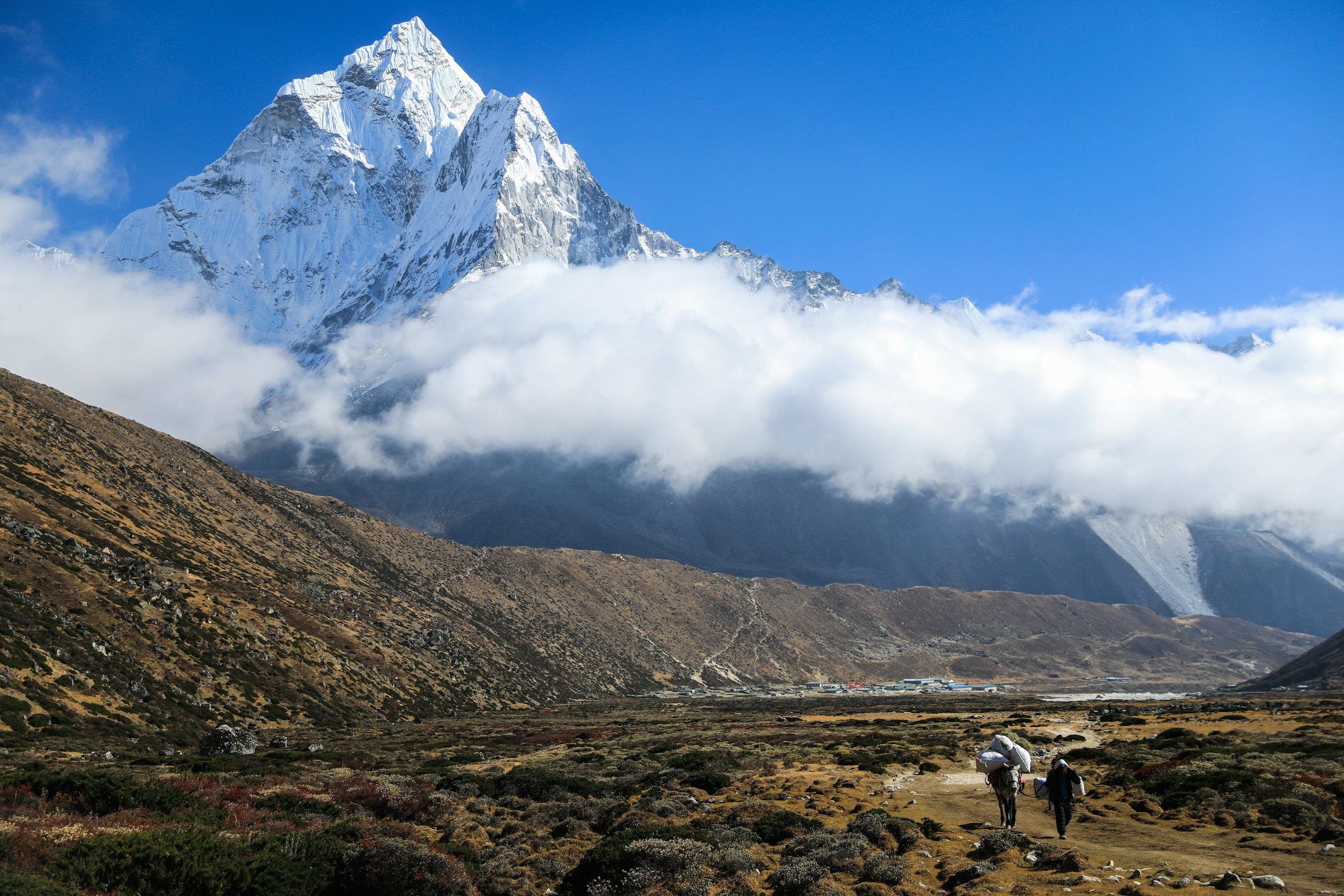
Trekkers on a dirt trail beneath low cloud with Ama Dablam behind them, guided down from Base Camp

THE TEAM

What a Sherpa team actually does.

Sirdar, guides, cooks and porters — the roles behind a trek that runs smoothly, and why they matter more above 5,000 metres.

Read the note

'Sherpa' names an ethnic group native to the high valleys of eastern Nepal, most of whom have lived and worked at altitude for generations — it is not a job title, though it is often used loosely as one. On our expeditions, the actual roles are a sirdar, who manages the whole ground operation and liaises with lodges and porters; one or more climbing or trekking guides, who set the day's pace and watch for altitude symptoms; a cook and kitchen crew at the larger camps; and porters, who typically carry duffel loads well within Nepal's voluntary weight limits rather than the improvised overloads that gave the profession its bad reputation decades ago.

On a technical peak like Island Peak, guides also fix and manage the rope on summit day, set the pace on the glacier, and make the turn-around call if the weather or the group's condition demands it — a call that overrides any client's preference, including ours.

We work with the same sirdars and lead guides across seasons rather than hiring fresh crews per trip, which means the team knows exactly how conservative or how capable a returning client is, and plans accordingly.

A row of down jackets and cold-weather trekking gear laid out before departure

GEAR

Packing for a night at -15°C.

What actually keeps you warm above 4,500 metres, and where renting locally beats carrying it from home.

Read the note

Teahouses above Dingboche are unheated except for a communal stove in the dining room, and a clear night at 4,900 metres routinely drops to -15°C or lower inside an unheated room. A sleeping bag rated to at least -20°C (comfort rating, not the marketing 'extreme' figure) is the single item worth buying rather than renting, because fit and a genuine seal at the hood matter more than most people expect.

Layering matters more than any one heroic garment: a base layer that manages sweat, an insulating mid-layer, and a wind- and waterproof shell, with a down jacket added at the top for stops and evenings. Down mittens over liner gloves outperform single heavy gloves, because you can adjust dexterity without losing the outer shell.

Down suits, high-altitude boots and technical hardware for a peak climb are almost always better rented in Kathmandu or Namche than flown in — the gear is well maintained, correctly rated for local conditions, and a fraction of the cost of buying kit you may use once. We send every client a specific list, weighted to what the season and route actually require, rather than a generic packing sheet.

DESTINATION. DATES. GROUP SIZE.

Tell us roughly what you have in mind.

A few details now; we'll ask the medical and fitness questions by email.

Who's coming?

Not sure yet? Start with a conversation. We'll tell you honestly what your fitness and dates suit.

BEFORE YOU ASK

A few things
worth knowing first.

How real is the risk of altitude sickness?

Real enough to plan around, and manageable when you do. Mild acute mountain sickness — headache, poor sleep, low appetite — is common above 3,000 metres and usually resolves with a rest day and fluids. The serious forms, HAPE and HACE, are rare on a well-paced itinerary but can be life-threatening within hours, which is why every guide carries a pulse oximeter, checks oxygen saturation daily, and has the authority to turn a client back downhill regardless of how they feel about it.

How fit do I need to be?

Fit enough to walk five to seven hours a day, most days, for one to two weeks, carrying only a day pack. You do not need mountaineering experience for a teahouse trek to Base Camp or Gokyo. For Island Peak or Lobuche East you need that same trekking fitness plus a willingness to learn basic rope, crampon and ice-axe technique, which we teach on-site — prior technical climbing is useful but not required.

What does travel insurance need to cover?

Emergency helicopter evacuation at altitude, specifically, and trip cancellation. Standard travel policies frequently exclude activity above a stated elevation (often 4,000 to 6,000 metres) or exclude mountaineering with rope and technical equipment — check both against the actual altitude of the trip, not just its name. We require proof of adequate cover before departure and can point you to policies known to work for this region, without selling insurance ourselves.

What permits do I need?

For most Khumbu routes: a Sagarmatha National Park entry permit and a local Khumbu Pasang Lhamu Rural Municipality entry fee. Annapurna routes require an Annapurna Conservation Area Permit and a TIMS card. Ladakh treks in Hemis National Park require an Inner Line Permit for foreign nationals, arranged through a registered local agent. We handle all permit paperwork as part of planning; you provide passport details and photographs in advance.

When is the best season to go?

Pre-monsoon (roughly March to May) and post-monsoon (October to November) are the reliable windows for both Nepal and Ladakh, with clear skies, stable trails and the best mountain visibility. Winter (December to February) is possible on lower routes for experienced cold-weather trekkers; the monsoon (June to September) brings leeches, cloud and landslide risk on most Nepal trails, though it is the dry season in the Ladakh rain shadow.

How big is a group, and can we book on this site?

Groups typically run four to twelve trekkers per guide team, small enough that a change in conditions or in someone's health is noticed immediately. Nothing on this site is a booking — the planner prepares an enquiry email for you to review and send, and dates, permits, cost and final group composition are confirmed afterward, in writing, by email.

NOTHING IS BOOKED YET

A good place
to begin.

Everest Base CampClassic Base Camp trek2 adults · 0 under 18s

We’ll prepare an email for you to review and send to Pemba. These details stay in this page until you choose to open your email app.